
LongHorn Steakhouse Porterhouse Prices
Menu prices can vary slightly by location, but recent LongHorn-focused menu trackers list a typical price range in the mid-30-dollar range in the United States for the full-size LongHorn®* Porterhouse.
LongHorn® Porterhouse – Price (2026)
| Size / Item | Approx. Price (USD) | Notes |
| LongHorn®* Porterhouse (22 oz) | $34.29 | Listed on LongHorn-focused menu site for Legendary Steaks. |
| LongHorn®* Porterhouse (20 oz note) | Around $32–34 | Nutrition sites refer to a 20 oz portion but show similar calorie range. |
Because prices change with time and region, this table should be treated as an approximate guide, not an official guarantee.
What Is the LongHorn®* Porterhouse?
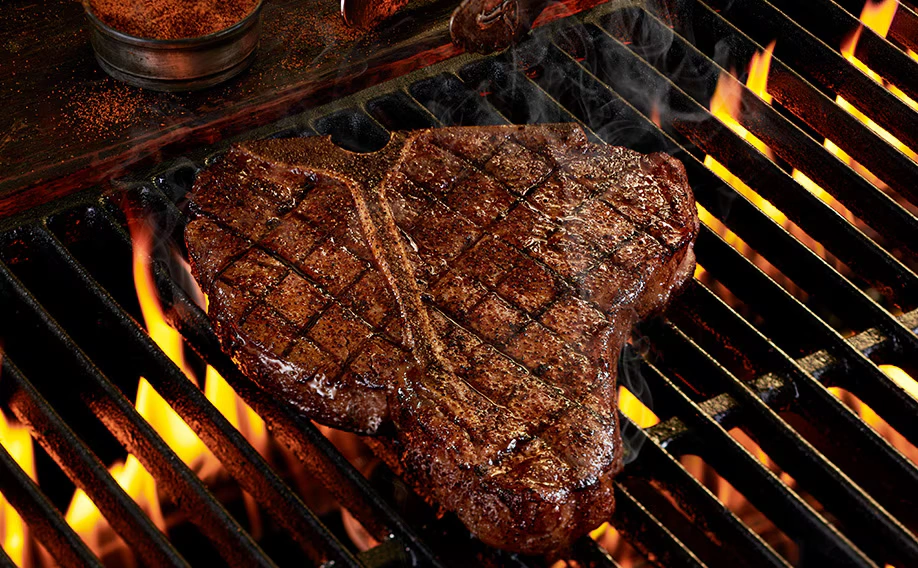
The LongHorn® Porterhouse is one of the largest “Legendary Steaks” at LongHorn Steakhouse, described as a hefty 22 oz bone-in steak that combines two premium cuts in one: a tender filet and a hearty strip steak separated by a T-shaped bone. The steak is fire-grilled over high heat to produce a bold, smoky crust while keeping the inside juicy, and it is seasoned with LongHorn’s signature steak seasoning blend for an intense beefy flavor.
On the plate, this cut is designed for serious steak eaters or for sharing because of its size and rich fat content. It is typically served with choice of side(s) and may be ordered to the guest’s preferred doneness, just like other LongHorn steaks.
LongHorn®* Porterhouse Calories
Different nutrition databases report slightly different calorie numbers, mostly due to portion assumptions and rounding, but they all agree the LongHorn®* Porterhouse is very high in calories.
Calorie Information for LongHorn® Porterhouse
| Source / Portion Description | Stated Calories | Notes |
| “LongHorn Porterhouse is a hefty 22 oz steak…” site | 1280 kcal | Includes detailed breakdown with 67 g fat and high protein. |
| Same site, 20 oz serving example | 1250 kcal | 1 g carbs, 74 g fat, 126 g protein. |
| Nutrition tracker listing “LongHorn Porterhouse 20 oz” | 1250 kcal | Matches carb, fat, protein numbers above. |
| Another tracker listing “LongHorn Porterhouse, 624 g” | 1280 kcal | Similar macronutrient profile; likely same menu item. |
From these numbers, a practical takeaway is that one full LongHorn® Porterhouse delivers about 1,250–1,280 calories, before adding sauces, butter toppings, sides, or drinks.
LongHorn®* Porterhouse Nutrition
Most independent menu-nutrition sites show a similar nutrition profile for a full LongHorn® Porterhouse serving. The table below merges consistent values; where two sources differ slightly, the range is noted.
Approximate Nutrition Facts – LongHorn® Porterhouse (Full Steak)
| Nutrient | Amount (Approx.) | Comments |
| Calories | 1250–1280 kcal | Very energy-dense entrée. |
| Calories from fat | ~610 kcal | Indicates about half of calories from fat. |
| Total fat | 67–74 g | High; provides juiciness and flavor. |
| Saturated fat | 27–30 g | Exceeds typical daily recommended limit on its own. |
| Trans fat | Up to ~5 g | Small but non-zero; varies by source. |
| Cholesterol | 330–365 mg | Over 100% of standard daily value. |
| Sodium | 1810–2450 mg | Very high; makes it a salty dish. |
| Total carbs | 1 g | Essentially carb-free entrée. |
| Dietary fiber | 2 g | Likely from seasoning or char; still quite low. |
| Sugars | 1 g | Minimal sugar content. |
| Protein | 126–150 g | Extremely high protein content; more than twice many daily targets. |
This profile makes the steak low-carb, extremely high-protein, and high-fat, which may fit ketogenic or carnivore-style approaches but not low-fat or low-sodium diets.
LongHorn®* Porterhouse Protein
For many guests, the main attraction of the LongHorn®* Porterhouse is the massive protein content.
Protein Content – LongHorn® Porterhouse
| Source | Protein Per Full Steak | Notes |
| LongHorn menu-info style site (22 oz listing) | 150 g | Listed with 1280 calories and 67 g fat. |
| Carb-tracking database (20 oz steak) | 126 g | With 74 g fat and 1250 calories. |
| Other nutrition entry (624 g portion) | ~50% of calories from protein | Works out near 150 g protein when calories are 1280. |
Even at the lower estimate of around 125 g, this is well over twice the daily protein target for many average adults, which explains why it is often recommended only for very hungry diners or people seeking a large post-training protein load.
LongHorn®* Porterhouse Allergen & Ingredient Info
LongHorn publishes allergen information through guides and PDFs, and third-party menu sites summarize common allergens, though the Porterhouse is primarily just seasoned beef cooked on shared equipment. Because restaurants can change recipes and cross-contact is possible, official documents always emphasize that allergen information is a guide, not an absolute guarantee.
General Ingredient and Allergen Notes – LongHorn® Porterhouse
| Aspect | Information (Approximate) | Notes |
| Main ingredient | Beef porterhouse steak | Bone-in combination of filet and strip. |
| Seasoning | House steak seasoning | Typically salt, pepper, spices, sometimes garlic/onion; exact blend proprietary. |
| Cooking fat | Grill oil or butter/steak finishing butter possible | Some locations brush steaks with butter or seasoned oil; may add dairy. |
| Gluten | Steak itself is naturally gluten-free; risk of cross-contact on grills or from sauces. | |
| Dairy | Risk if butter or butter-based finishing is used or if served with cheesy sides. | |
| Soy | Some guests with soy allergy report that staff can accommodate; shared surfaces still possible. | |
| Nuts | The steak itself does not typically contain nuts, but cross-contact in kitchen always possible. | |
| Egg / Shellfish | Not standard components of the steak, but may be present in some sides or shared fryers. |
Because allergen risk depends on local practices, anyone with serious allergies should ask for the latest official allergen guide and speak to staff before ordering.
Recommended Pairings for Porterhouse
The LongHorn® Porterhouse is rich, salty, and intensely beefy, so ideal pairings help cut through fat, add freshness, or complement the char.
Recommended Pairings for LongHorn® Porterhouse
| Category | Example Pairing | Why It Works |
| Starchy side | Baked potato, mashed potatoes, seasoned fries | Soaks up juices and balances saltiness with comfort-food texture. |
| Green vegetable | Steamed broccoli, side salad, green beans | Adds fiber and freshness to a heavy, fatty steak. |
| Grilled veggies | Grilled asparagus, mushrooms, onions | Echoes the grill flavors and adds umami without much extra fat. |
| Sauce / topping | Sautéed mushrooms, peppercorn sauce, garlic butter | Boosts umami and aroma; butter ramps richness, pepper adds bite. |
| Bread | House bread or rolls | Helpful to moderate strong seasoning and salty crust. |
| Beer | Malty amber ale or stout | Stands up to char and fat while cleansing palate. |
| Wine | Full-bodied red (Cabernet Sauvignon, Malbec) | Tannins cut fat and match the steak’s intensity. |
| Non-alcoholic | Sparkling water, unsweet iced tea | Bubbles or tannins refresh the palate between bites. |
These pairings follow general steak-pairing principles and are consistent with the strong, smoky profile of the LongHorn® Porterhouse.
How to Make LongHorn®* Porterhouse Recipe
LongHorn does not publish an official home recipe with exact seasoning ratios, but a copycat approach follows classic porterhouse technique: large bone-in steak, high-heat grilling, and a bold seasoning rub.
Key Steps for a LongHorn-Style Porterhouse at Home
Choose the Steak
Buy a porterhouse steak around 20–22 oz, at least 1.5–2 inches thick for good sear and juicy center.
Look for a steak with good marbling in the strip side and a well-sized filet portion.
Season Generously
Pat the steak dry, then coat both sides with kosher salt, black pepper, garlic powder, and onion powder, adding a touch of paprika or chili powder for color and a mild kick.
Let it sit at room temperature for about 30 minutes so seasoning adheres and the center is less cold before grilling.
Grill Over High Heat
Preheat a gas or charcoal grill to high heat; oil the grates lightly to reduce sticking.
Sear each side for several minutes to develop a dark crust, then move to a slightly cooler zone to finish to your preferred doneness using a meat thermometer.
Target Internal Temperatures
Approximate pull temperatures are:
- Rare: 50–52°C
- Medium-Rare: 55–57°C
- Medium: 60–63°C
Temperatures rise slightly while resting.
Because the filet and strip cook slightly differently, angle the thicker filet side closer to the hotter area if needed.
Finish and Rest
When the steak reaches target temperature, remove it and top optionally with a garlic-herb butter made from softened butter, garlic, parsley, and a pinch of salt.
Rest 5–10 minutes so juices redistribute, then slice across the grain, separating the filet and strip if serving plated.
This method does not duplicate LongHorn’s proprietary seasoning exactly but reproduces the core experience: a large, bone-in porterhouse with a deep sear, bold seasoning, and juicy interior.
LongHorn Porterhouse vs Outlaw Ribeye
Both the LongHorn® Porterhouse and the Outlaw Ribeye are signature, high-end steaks at LongHorn, but they differ in cut, texture, flavor, and even typical ranking in “best steak” lists.
LongHorn Porterhouse vs Outlaw Ribeye
| Feature | LongHorn®* Porterhouse | Outlaw Ribeye |
| Cut type | Bone-in porterhouse: filet + strip in one steak | Bone-in ribeye steak |
| Approx. size | About 22 oz | About 20 oz |
| Texture | Mix of ultra-tender filet and firmer strip | Richly marbled and uniformly tender/juicy |
| Flavor profile | Big beef flavor with varied texture across sides | Very intense beef flavor due to marbling and bone |
| Calories / macros | ~1250–1280 kcal, 67–74 g fat, 126–150 g protein | Similar high-calorie ribeye; also high fat and protein |
| Visual presentation | Large T-bone shape with clearly separated sides | Thick, rounder steak with bone and heavy char |
| Best steak rankings | Often rated highly but sometimes behind ribeye in flavor-focused rankings | Frequently ranked among top LongHorn steaks for flavor and juiciness |
| Ideal for | Diners who want two cuts in one and enjoy very large portions | Diners who want maximum marbling and flavor in a single cut |
In many expert or fan rankings, the Outlaw Ribeye is praised for its flavor and fat content, while the Porterhouse is celebrated for sheer size and variety of textures.
17 FAQs
1. Is the LongHorn® Porterhouse the biggest steak on the LongHorn menu?
It is routinely described as a hefty 22 oz Legendary Steak and is one of the largest standard steaks on LongHorn’s menu.
2. How many calories are in one LongHorn® Porterhouse?
Most nutrition trackers show around 1,250–1,280 calories for a full steak serving, before sides or sauces.
3. How much protein does the LongHorn® Porterhouse have?
Depending on the source and assumed portion, the steak provides around 126–150 g of protein, far above typical daily targets.
4. Is the LongHorn® Porterhouse low-carb?
Yes. Databases list about 1 g total carbohydrates and 0 g net carbs, making it effectively carb-free.
5. Is the LongHorn® Porterhouse good for keto diets?
Because it is high in fat and protein with almost no carbs, it can fit ketogenic or very-low-carb diets, though the saturated fat and sodium are very high and should be considered.
6. How much fat and saturated fat are in the steak?
Sources report 67–74 g total fat and 27–30 g saturated fat, meaning the steak alone exceeds typical daily saturated-fat recommendations.
7. Is the LongHorn® Porterhouse gluten-free?
The plain steak itself is naturally gluten-free, but potential cross-contact on shared grills and from sauces or toppings means guests with celiac disease should consult the official allergen guide at their local restaurant.
8. Does the LongHorn® Porterhouse contain dairy?
The meat alone does not, but some locations use butter or butter-based toppings on or with steaks, and many common sides contain dairy, so dairy-sensitive diners should request no butter and check sides carefully.
9. Is the LongHorn® Porterhouse a good choice for weight loss?
At over 1,200 calories before sides, this steak is generally not a weight-loss-oriented option unless serving size is strictly controlled or shared.
10. How does the LongHorn® Porterhouse compare to the Outlaw Ribeye for flavor?
Reviews and rankings often highlight the Outlaw Ribeye for its very rich, marbled flavor, whereas the Porterhouse is praised for variety of textures and size. Preference depends on whether a diner values variety or pure ribeye richness.
11. Which is more tender: the LongHorn® Porterhouse or the Outlaw Ribeye?
The filet side of the Porterhouse is the most tender component, but the ribeye offers consistently tender bites across the cut due to marbling. Overall tenderness depends on which part of the Porterhouse is being eaten.
12. Is the LongHorn® Porterhouse suitable for sharing?
At about 22 oz, many diners find it large enough to split, especially when paired with sides and appetizers.
13. What is the recommended doneness for a Porterhouse?
Steak enthusiasts often suggest medium-rare to medium for porterhouse steaks to keep both the filet and strip juicy while fully expressing flavor, though LongHorn cooks to any requested doneness.
14. How salty is the LongHorn® Porterhouse?
Sodium ranges roughly from 1,810 to 2,450 mg per steak, which can approach or exceed many daily sodium targets in one entrée.
15. Is the LongHorn® Porterhouse a T-bone steak?
It is closely related. Both Porterhouse and T-bone share the T-shaped bone, but the Porterhouse has a larger filet section, and LongHorn’s marketing emphasizes size and premium positioning.
16. Does LongHorn list exact ingredients for the Porterhouse seasoning?
No. The specific seasoning blend is proprietary, though it is described generally as a bold steak seasoning with salt, pepper, and spices.
17. Can people with soy allergy safely eat at LongHorn?
Individual experiences suggest some locations can accommodate soy allergies, but because kitchens use shared equipment and recipes can vary, people with soy allergy should rely on staff and the current allergen guide rather than assumptions.
Final Thought
The LongHorn® Porterhouse stands out as a huge, showpiece steak that combines two prized cuts—filet and strip—on one T-bone, delivering roughly 1,250–1,280 calories, well over 120 g of protein, and a very high load of fat and sodium in a single entrée. For steak lovers, it offers both variety of texture and the theater of carving meat off a large bone, but for health-conscious diners, it is best approached thoughtfully. Consider sharing, pairing it with lighter sides, or choosing it as an occasional indulgence rather than an everyday meal.
To enjoy this steak at its best, it helps to understand its nutrition profile, allergen considerations, and pairings, and to know how to approximate it at home with a thick porterhouse, bold seasoning, and very hot grill. Whether compared with the Outlaw Ribeye or other LongHorn favorites, the Porterhouse earns its reputation mainly through size, protein punch, and classic steakhouse drama, making it a memorable choice for those who plan for its richness and respect its nutritional impact.